
Tunisia Visa Requirements: Everything You Need to Know
Start With the Basics
For many travelers, Tunisia is straightforward on the entry side, but straightforward does not mean automatic. Visa policy, passport validity, proof of onward travel, and overstay rules still matter. The most common travel problems happen because people rely on assumptions instead of checking the practical requirements tied to their nationality.
Who Can Usually Enter Without a Visa
Many travelers from the EU, the UK, North America, Australia, and several other European countries can usually enter Tunisia visa-free for short tourist stays. The common tourist limit is often up to 90 days, but travelers should still verify the current rule that applies to their passport before departure.
The key point is this: visa-free does not mean document-free. You still need to satisfy entry requirements.
Documents You Should Have Ready
Even if you do not need a visa, it is wise to travel with the right supporting documents in an easy-to-show format.
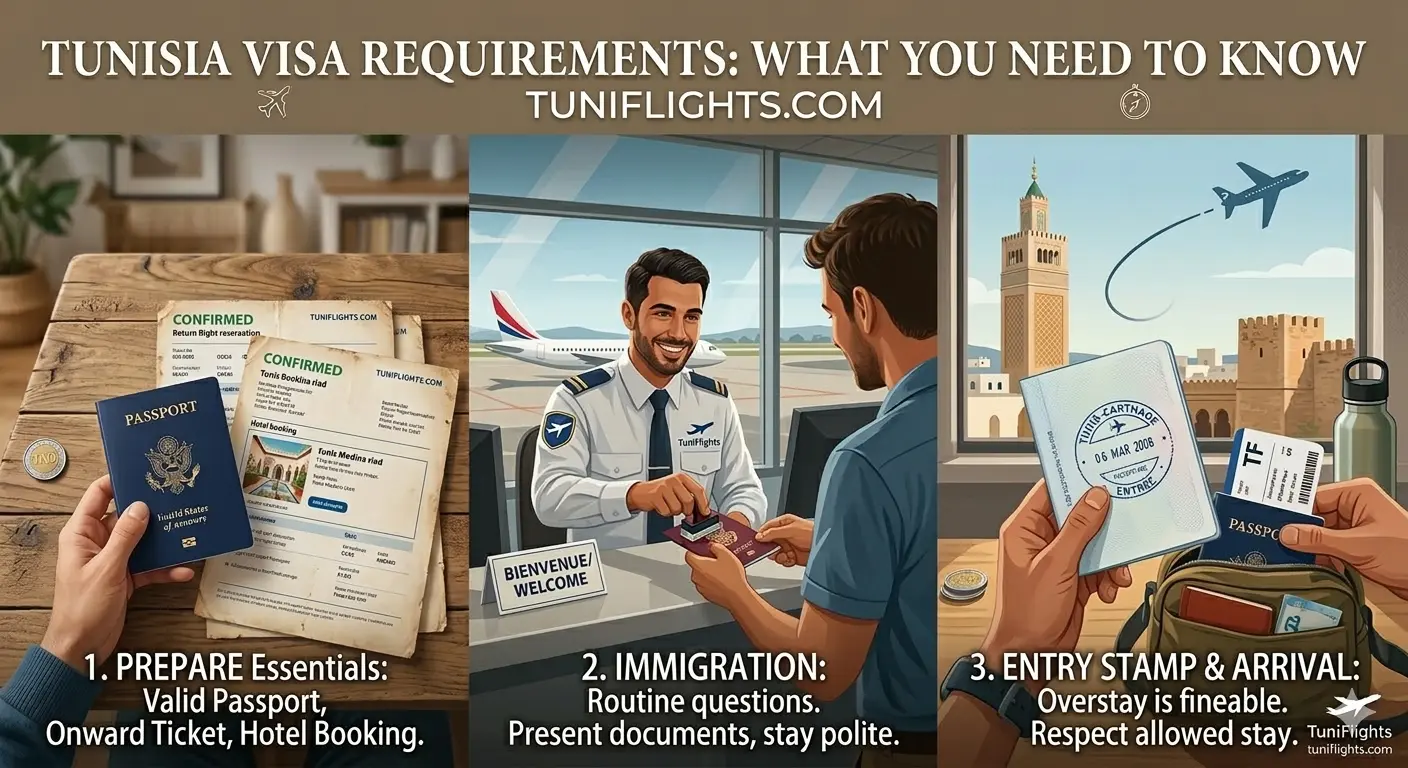
Prepare:
• A valid passport with sufficient remaining validity
• A return or onward ticket
• Accommodation details such as a hotel booking or host address
• Basic trip information in case immigration asks about your stay
Printed copies are not always required, but they are still useful if your phone battery dies or your booking app will not load.
Passport Validity: Do Not Guess
Passport validity rules are where travelers get sloppy. A passport that is technically valid is not always valid enough for entry. If your passport is close to expiry, renew it before the trip instead of gambling on airport discretion.
As a working rule, your passport should remain valid well beyond your stay, and you should never assume an ID card will be accepted simply because you are traveling within a Mediterranean region. For Tunisia, the passport is the safe document to rely on.
What Happens at Immigration
For most tourists, immigration is routine. You present your passport, answer a few simple questions if asked, and receive an entry stamp. The process is often quick, but arrival timing matters. Busy inbound banks can create longer lines.
A few practical tips help:
- Keep your passport and booking details accessible
- Fill out any arrival form carefully if one is provided
- Avoid packing essential travel documents deep in checked baggage
- Stay polite and concise if asked about accommodation or trip duration
If Your Nationality Requires a Visa
Some travelers do need to apply in advance through a Tunisian embassy or consulate. If that applies to you, do not rely on generic travel forums or outdated social posts. Embassy guidance and official instructions matter more than travel hearsay.
If there is any uncertainty around your nationality, residency, or travel document type, verify before you book non-refundable elements of the trip.
Overstaying: Small Mistake, Annoying Consequences
Overstaying is one of those travel issues people dismiss until it becomes their airport problem. In Tunisia, exceeding your allowed stay can lead to fines and delays during departure. Even if the financial penalty is manageable, the stress and time loss are not worth it.
Track your entry date carefully and do not assume airport staff will treat a short overstay casually.
Useful Arrival Tips
A smoother arrival often comes down to simple preparation:
- Keep a hotel confirmation handy
- Have enough cash or card access for your airport transfer
- Know your first-night address
- Double-check whether your airline gave you any arrival paperwork to complete
Final Takeaway
For many travelers, Tunisia is easy to enter, but easy still requires preparation. Check whether your nationality is visa-free, travel with a proper passport, keep proof of your trip details ready, and respect the length of stay you are granted.
That small amount of preparation removes most of the friction. If you do it right, immigration becomes a routine step rather than the first problem of the trip.